The Museum is home to a wide range of different exhibits. While many are permanent, others may only be on display here for a limited time. Keep an eye out for new additions, as the Museum team is working hard to bring new exhibits into the space for your enjoyment!

Because of the nature of an operating collection, aircraft contained within our hangar exhibits are subject to change.
New Exhibits for 2026

The Atomic Age

Enola Gay american flag
The Atomic Age

On Display Within the Main Museum Building 

We entered The Atomic Age with the detonation of the world’s first nuclear weapon at the Trinity test site in Alamogordo, New Mexico on July 16, 1945. This exhibit follows the development of that device via the Manhattan Project — a colossal US-led scientific and manufacturing endeavor — and the atomic bomb’s deployment over Japan mere weeks after the Trinity trial; helping bring a rapid end to WWII, and forever changing our lives.

But what led up to these events began a half century earlier with Henri Becquerel’s accidental discovery of radioactivity. Some of the greatest physicists in human history, from Marie and Pierre Curie, to Lise Meitner, Albert Einstein and Enrico Fermi, played major roles in leveraging his revelation from a mere scientific curiosity into entirely new fields of research which have given rise to numerous technological developments of global importance affecting each of our lives daily. Some of these include electric power generation, national defense, food safety, medical imaging, cancer treatments, communications, hyper-accurate time-keeping and rocketry to name but a few — but they are all positive products of the Atomic Age.

In addition to a comprehensive, clearly-composed narrative, complete with numerous rarely-seen period images and illustrations, the exhibit also features several fascinating artifacts from the Manhattan Project itself, including an original (inert) Fat Man atomic weapon casing of the type dropped over Nagasaki, Japan on August 8, 1945. There is also an approachable explanation for the science involved with nuclear fission too.

Visitors to our Atomic Age display should examine its walls carefully for a QR code linking them to an exclusive, expanded online version of the exhibit, featuring many more images and historical details. There are four additional QR codes linking to stories about Soviet-Russia's wartime espionage efforts to steal our nation's nuclear secrets too.


With Much Appreciation

We wish to thank the American Nuclear Society which both advised and helped fund the exhibit while also loaning us several important display items, including a section of graphite block from Chicago Pile 1 (the world’s first reactor to produce a sustained chain reaction). We would also like to extend our gratitude to the Experimental Aircraft Association Aviation Museum for loaning us their Fat Man casing, and Estes Express Lines for donating the transportation of this key exhibit.


Sponsored by:

The American Nuclear Society
Estes Express Lines

Curated by:
Keegan Chetwynd
Richard Mallory Allnutt
Zachary Baughman

Designed by:
Chad Hill

Drafting: The Art of Aircraft Engineering in WWII

Drafting: The Art of Aviation Engineering in WWII

On Display Within the Main Museum Building 

Have you ever wondered how the US aviation industry went from producing just 921 military aircraft in 1939 to complete almost 300,000 over the following five years? 

Well, a major contribution to that achievement came from the technical drafting personnel in the aircraft manufacturer design offices. This exhibit helps illuminate the essential role which these long-unsung civilian men and women played in helping defeat the Axis Powers.

Before WWII began, the dire economic consequences of the Great Depression were still widespread in America. Our military’s equipment budget was equally affected. Even during the late 1930s, most US aircraft types were built in such small numbers that they were essentially handmade, with most parts being fabricated and custom-fitted at one factory. Consequently each airframe was essentially unique; parts interchangeability proving a significant challenge. 

At the onset of WWII, therefore, a radical shift in manufacturing processes became essential to meet rapidly accelerating demands for military aircraft and the ability to patch up battle-scarred airframes in the field. To fulfill these needs, aircraft constructors industrialized parts manufacture on a vast scale, distributing it across the USA and Canada to a myriad of subcontractors, many never having previously worked in aviation.

To ensure components aligned properly with adjacent parts from different fabrication shops on the assembly line, each company had to work from an identical set of precision engineering drawings. To achieve this, designers greatly expanded their drafting offices, since the drawings now had to accurately describe how to make and fit together every single part. Blueprint copies of the relevant drawings (and subsequent revisions) were provided to each parts supplier.

Creating these drawings, thousands of them for any given aircraft, required the combined endeavors of huge numbers of highly skilled, artistically gifted technicians. Unlike today’s aerospace industry, which depends upon computer aided design (CAD) software, every engineering drawing predating the digital revolution had to be hand-drafted in pencil using only basic tools like a straight edge, compass, or protractor to lay out dimensions accurately.

Some drawings, especially assembly drawings, were immensely complex and could require hundreds of hours to complete. Making revisions to drawings, or correcting errors, often required recreating the drawing from scratch too!

This exhibit, on loan from AirCorps Aviation, features numerous original engineering drawings (not blueprints) drafted during WWII to assist with the large-scale manufacture of superlative aircraft designs like North American Aviation’s P-51 Mustang, B-25 Mitchell and T-6 Texan (airworthy examples of each being on display at our museum). It explains some of the techniques used in both creating the drawings (with original period artifacts from contemporary drafting offices) and how someone working on the factory floor would interpret their meaning to build a part. Of equal merit, the exhibit also highlights the lives of some of the unsung heroes who drafted the drawings on display too (Fred Prill, Eugene Clay and Clyde Maulding) putting a human face to the incredible and rarely told story of the role which such people played in winning WWII. We feel sure that museum visitors will find this exhibit as fascinating as we do!


With Much Appreciation

We wish to thank AirCorps Aviation for the loan of this marvelous exhibit. We would also like to express our gratitude to AirCorp's archivist/librarian, Ester Aube, who both curated the display and traveled to the museum to help arrange it on our walls.

AirCorps Aviation & Ester Aube:

AirCorps Aviation is internationally renowned as one of the world’s finest warbird restoration shops. They have produced numerous Oshkosh Award-winning aircraft over the past two decades, whilst also establishing several significant subdivisions, like AirCorps Library, for catering to various facets of the restoration industry. With a modest annual subscription fee, AirCorps Library is a major asset to anyone interested in historical aviation. It provides digital access to literally thousands of incredibly rare WWII-era aviation manuals, documents and manufacturing drawings — adding to this list almost daily. Over the past decade, they have scanned and catalogued untold numbers of microfilmed engineering drawings for almost all of the major US-designed WWII aircraft types (and others), with these high resolution scans being easy to find and view online. Furthermore, in 2019, AirCorps Library acquired Ken Jungeberg’s collection of some 50,000 original North American Aviation engineering drawings which he had rescued from destruction whilst working for the manufacturer. AirCorps’s Ester Aube has overseen much of AirCorp Library’s work, including the on-going effort to scan and archive this historically significant trove of information now becoming available to subscribers. The exhibit “Drafting: The Art of Aircraft Engineering in WWII” resulted from Ester’s diligent work researching the story behind the men and women who created the drawings found in the Ken Jungeberg Collection.


Sponsored by:

AirCorps Aviation

Curated by:
Ester Aube (AirCorps Library)
Zachary Baughman

Designed by:
Ester Auber

Observation Deck

Now Featuring

Warbird Observation Deck

Get the perfect overhead view of the flightline and our historic aircraft during flight operations from the Warbird Observation Deck. Relax in rocking chairs constructed from vintage aircraft seats, and keep an eye out as we expand our exhibit space on the observation deck- guests will be able explore how our airplanes are kept in operating condition 75 years after they were built!

Practice Makes Perfect

Now Featuring

Practice Makes Perfect

Ever wonder how the United States was able to train so many pilots during World War II? This new exhibit features a selection of interesting and unusual pilot training materials developed during World War II, including a full motion original flight simulator used during the war! Guests of all ages can try their hand at computer flight simulators, featuring some of our own planes.

Victory Garden Summer 2026

Victory Garden

The Military Aviation Museum is excited to announce the creation of a new interpretative exhibit: a Victory Garden. Designed to recreate the efforts of civilians on the home front during World War II, the garden expands upon the Museum's principles of preservation, education, and inclusion.

Maintained by Museum staff and volunteers, season vegetables, fruits, and flowers will be rotated throughout the year. A focal point of the education department, students and summer campers can dig deeper into life in the 1940s for children of all ages.

Guests to the Museum will be able to learn about the history of victory gardens, or war gardens, and the hard work and patriotism of those who kept the home front alive while their nations were at war.

Join us in the garden to experience true living history!

Other Current Exhibits

Bomber Jacket Cover 3

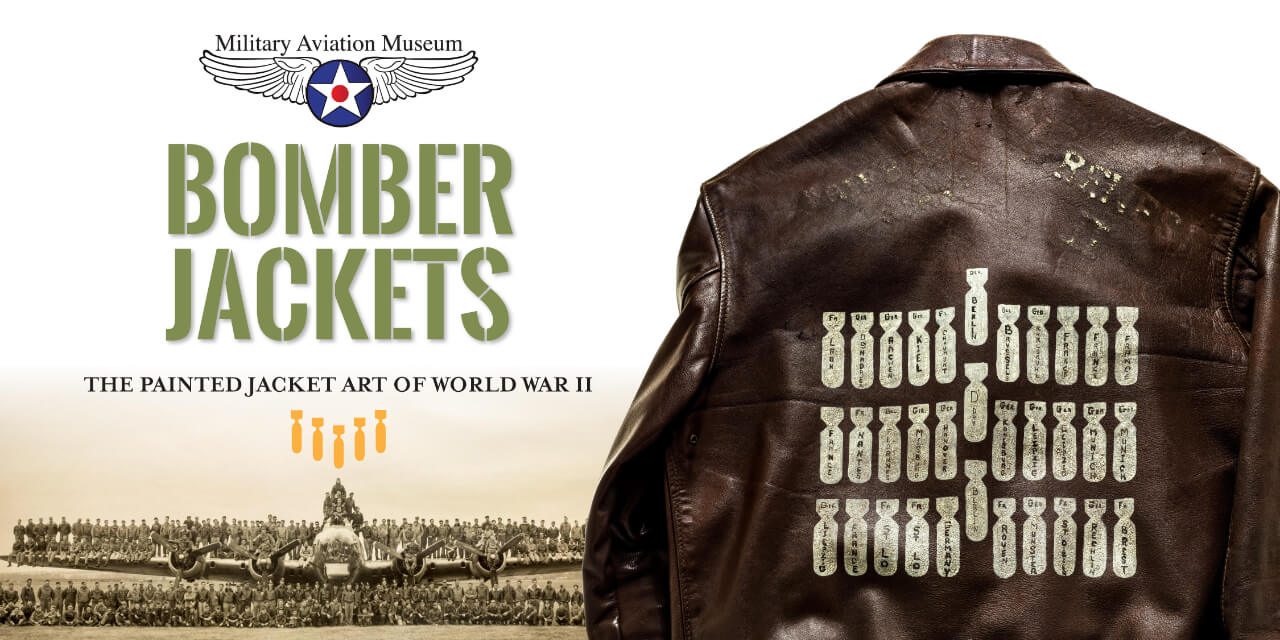
Bomber Jackets: The Painted Jacket Art of World War II

On Display in the Prescott Family Trust Gallery 

The Legendary Type A-2 Flying Jacket has become an icon of World War II. Widely personalized by aircrews, and known colloquially as The Bomber Jacket, each and every A-2 that survives has a story to tell us about WWII. Photographer John Slemp has done more to catalog these stories than perhaps anyone else, and several of his remarkable images are being assembled for the first time ever, as a Museum exhibit.

Photography by:
John Slemp
Curated by:
Zack Baughman
Richard Mallory Allnutt
Design by:
Chad Hill

The Military Aviation Museum is honored to host this exhibit, and to celebrate these artistic masterpieces from the war years. Joining a selection of images from Slemp’s 2022 book Bomber Boys: WWII Flight Jacket Art, will be a few real, customized jackets from the museum’s own collection. Each one of the jackets shown represents a cherished family artifact, with no two ever being exactly alike.

At the center of the exhibition is a jacket worn by Staff Sergeant Laffetti “Pete” Trace (1922-1990), a B-17 Gunner with the 748th Bomb Squadron, 457th Bomb Group – part of the Mighty Eighth Air Force that brought the war to the German doorstep with their strategic bombing campaign. His jacket bears markings for 34 of the 36 missions he is known to have flown – the last of which hit the U-Boat pens in Bremen on March 11th , 1945.

In addition to original World War II Flying Jackets, the exhibit also features larger than life recreations of Slemp’s photography – documenting jackets from across the country - whether in attics or museums. With every brush stroke visible, viewers have the opportunity to stand back and take in the whole jacket before zeroing in to admire each brush stroke on these wartime masterpieces. The exhibit also explores the history leading up to the production of these iconic garments, examining the roots of flying clothes in the earlier years of aviation, allowing visitors to immerse themselves in the elaborate history of the Type A-2 Flying Jacket.

John Slemp has been an award-winning commercial photographer for over 25 years, creating images for editorial, corporate, and advertising clients worldwide. A life member of the American Society of Media Photographers, he has served in leadership positions at both the local and national levels. Born in Japan, he served in the US Army in the US and Germany as an armor officer in several command and staff roles. A currently exhibiting artist, he completed his first book on WWII "bomber jackets" in the fall of 2022, which is now on sale internationally.

Chad Hill of Django Studios is a Chicago-based graphic designer and artist with a unique specialization in historic aviation, working with 25 museums across the US and UK, designing everything from apparel, patches, event graphics, logos and exhibits, including this Bomber Jacket Exhibit. Also well-known for painting period correct WWII nose art and having just recently completed painting the B-25 “Executive Sweet,” Chad will be at the opening live-painting a special A-2 Bomber Jacket to commemorate the exhibit.
Army Hangar

Army Hangar Aircraft

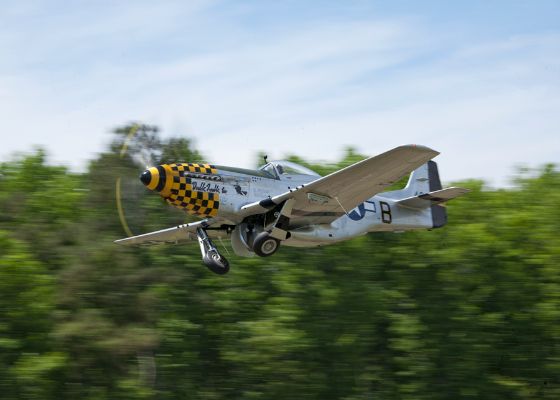
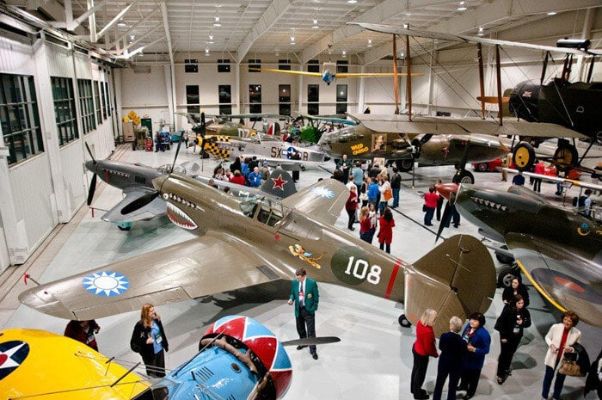
Connected to the main museum building on the west side is the Army Hangar. This 15,000 square foot hangar is where you will find many of our US Army Air Forces aircraft mixed in with some of our collection from Great Britain, Russia and other countries. Visit the Army Hangar to see the P-40 Warhawk, P-51 Mustang, P-26 Peashooter, the Messerschmitt Bf 109, the B-25 Mitchell, the Spitfire, Hurricane, and our three Polikarpov fighters.

Navy Hangar

Navy Hangar Aircraft

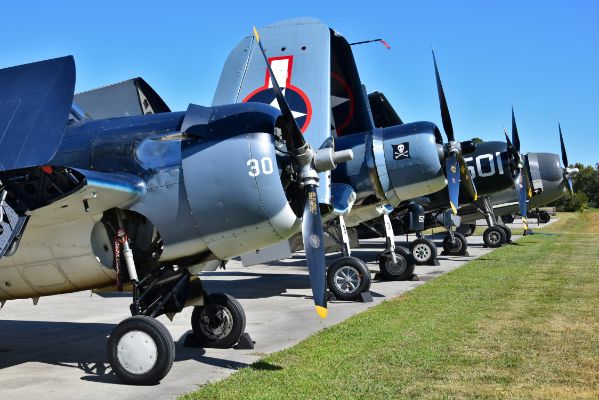
Flanking the main museum building on the east side is the Navy Hangar. This 15,000 square foot hangar is home to many of the museum’s US Navy aircraft. You will usually find planes like the FM-2 Wildcat, PBY Catalina, FG-1D Corsair, SNJ-2 Texan, Skyraider and TBM Avenger tucked inside along with the N3N Canary mounted on floats!

WWII_Hangar_resize_1_50

WWI Hangar Aircraft

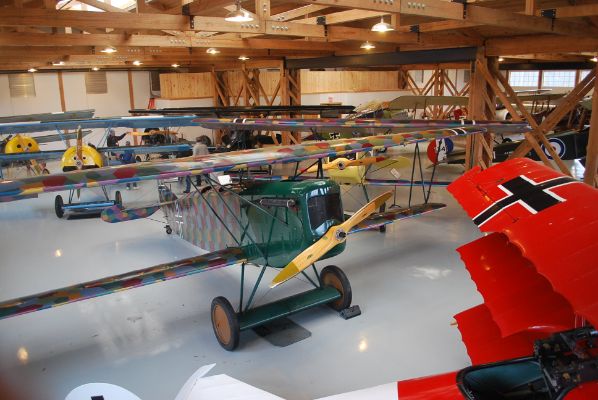
The Museum’s collection of WWI replicas and restored original aircraft are displayed in the WWI Hangar, itself a recreation of a WWI-era hangars whose plans were documented by the British Government over 100 years ago. Fokker Dr. 1 Triplanes, and Sopwith 1 ½ Strutters are among the airplanes you will see in here. A restored original 1918 Thomas Morse Scout, is joined by an original 1918 Curtiss JN-4 Jenny as well.

When Nature Calls resize

When nature calls... at 26,000 FT

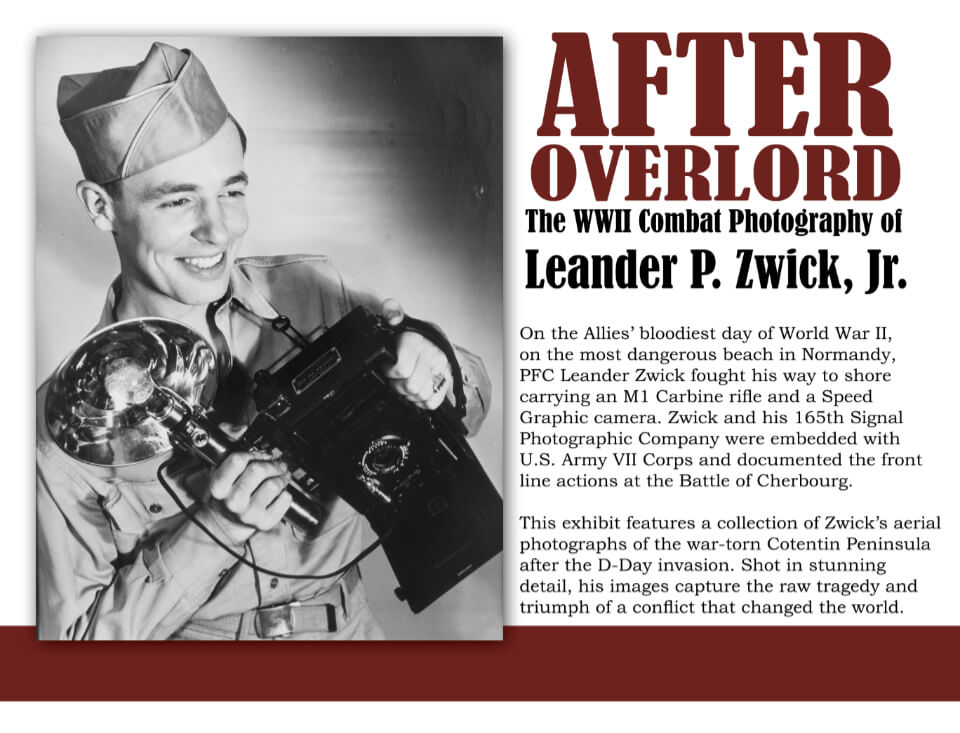
Explore the often-overlooked challenges of wartime aviation in our exhibit When Nature Calls at 26,000 Feet!. Discover the harsh and hazardous realities faced by WWII aircrews when responding to basic biological needs in extreme conditions, where even using the bathroom required bravery, precision, and layers of gear. This unique exhibit sheds light on the ingenuity and endurance of those who risked everything, even comfort, to help win the war from above.

Future Exhibits

Made in America

Future Exhibit

Made in America

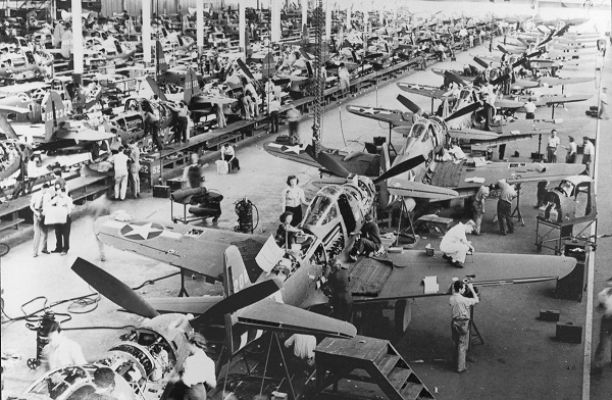
Explore American industry’s contributions to the war effort during World War II. Get hands-on with the construction techniques used to assemble more than 300,000 aircraft and learn about the men and women who made up the Arsenal of Democracy.

FlatTops

Future Exhibit

Flattops: America’s Aircraft Carriers in WWII

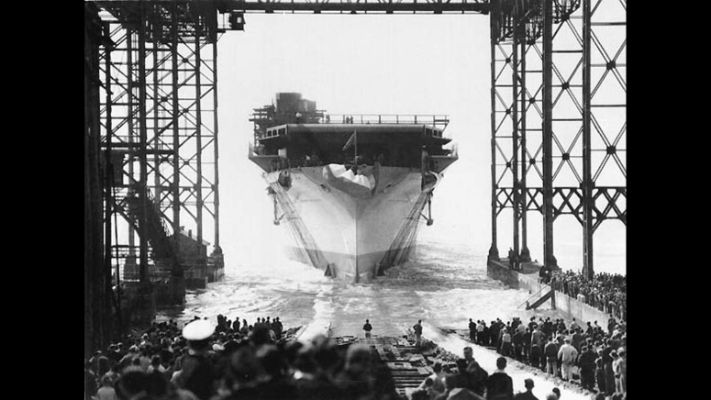
The Hampton Roads community has a strong connection to the history of the Aircraft Carrier. Explore how design and construction breakthroughs made here in Virginia gave sailors and aviators the edge they needed to win World War II.

Past Exhibits

The longest yarn

MAM-The Longest Yarn__FB-1920x1005 resize

A Thread Through History, The Longest Yarn is a remarkable knitted and crocheted tribute commemorating the 80th Anniversary of D-Day, telling a story of courage, remembrance, and community through art.

Created by a team of artists, veterans, and volunteers, The Longest Yarn was knitted and crocheted to span 80 meters, representing 80 years since D-Day and the 80-day Battle of Normandy that led to the liberation of Paris. First unveiled in Carentan, France, on June 6, 2024, this stunning 3D installation launched to mark the D-Day 80th anniversary before touring across the United Kingdom and Ireland, where it attracted more than 250,000 visitors.

The Longest Yarn crossed the Atlantic for a limited U.S. tour before returning home to Carentan in 2026. The Military Aviation Museum was one of only a few American venues privileged to host this incredible display.

The Longest Yarn connects generations through creativity and remembrance, truly a living tribute to the bravery and sacrifice of those who fought for freedom.

Farre

Henri Farré and the Birth of Combat Aviation

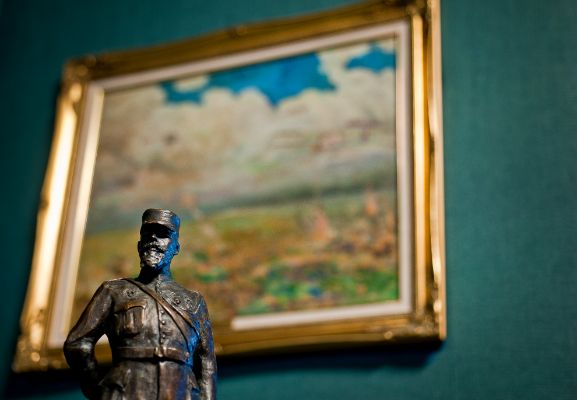
Spread throughout the main Museum building, the works of Henri Farré are an incredible look back at the birth of air combat during World War I. Assembled for display as part of the 100th Anniversary commemorations for World War I this unequaled collection of original works painted during the war by Farre (an aerial observer in the French Air Force), depicts airfield life, aircraft and of course the heartbreaking reality of aerial combat.
Vengeance Weapon 1 Exhibit

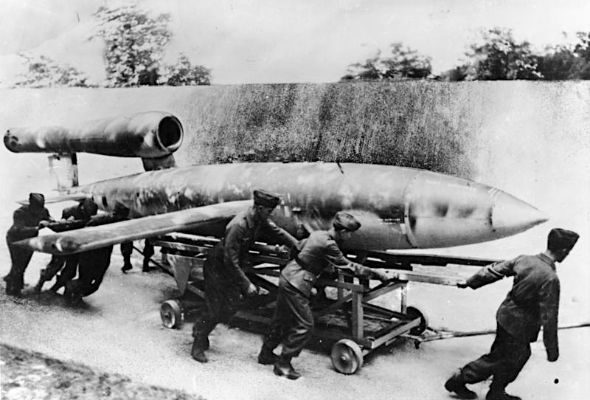
Vengeance Weapon 1

First of the so-called Vengeance Weapons developed by Nazi Germany to strike back at Allied civilians, the V-1 was often known as the buzz bomb, or doodlebug by the British. Designed to reach targets like London, the V-1 was an early cruise missile that you can come face-to-face with at the Museum! Learn how secret allied technology, air defense coordination, anti aircraft guns and even jet fighters were drawn into the fight to stop the V-1.
Vietnam Website Exhibit

*Past*

Virginia and the Vietnam War

Fifty years since the Fall of Saigon—when communist forces invaded the capital of South Vietnam and renamed it Ho Chi Minh City—Virginians still feel the impact of the Vietnam War, a long, costly, and controversial conflict. The exhibit examines this period in history through the use of oral histories collected across the state.

More than 230,000 Virginians served in Vietnam, of them, 1,490 would be killed in Vietnam. This complex period in history is examined by the new exhibit Virginia and the Vietnam War, on display at the Military Aviation Museum through 2/24/2025.

Modern Magellans Traveling Exhibit World Cruiser

*Past*

Modern Magellans: The First Round-the-World Flight

It is hard to imagine a time when the skies were not filled with passing aircraft, when we hardly traveled further than our county line and a simple delivery could take months to arrive. But a century ago, such was the norm. That is, until September 28th, 1924, when four brave men landed their two single-engine biplanes at Sand Point Airfield in Seattle, Washington, completing a journey that would change the world in ways we had not seen in 400 years.

The United States' mission to be the first to fly around the world was founded on military necessity, scientific curiosity, and shameless pride. This exhibit tells that story.

Usaa’s Poppy Wall Of Honor

*Past*

USAA Poppy Exhibit

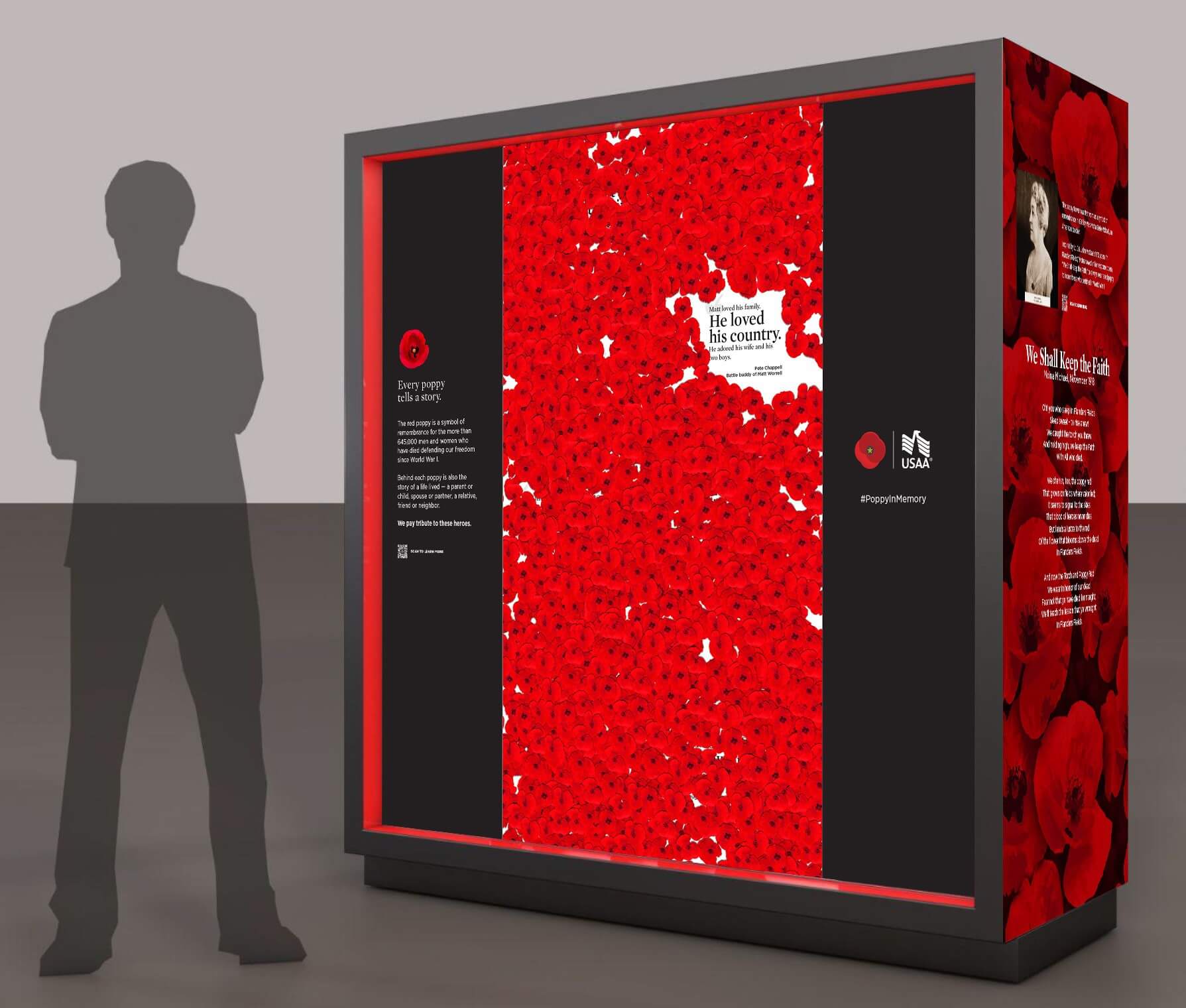
Placed in the Museum through a collaboration with USAA, the Poppy Exhibit provides visitors the opportunity to learn more about the true meaning of Memorial Day. The Exhibit also provides an opportunity for visitors to pause and reflect on the more than 645,000 military service members who gave their lives in combat in service to our country.

Aero Obsoleta

*Past*

Aero Obsoleta, Photography by Allen Jones

Displayed in the Museum’s new Prescott Family Trust Gallery, the photographs of Allen Jones depicted vintage aircraft overgrown or cocooned for future use, examining how a culture’s changing technology impacts the landscape around us. The pieces combined the artist’s interest in WWII and in aviation with his interest in exploring natural forms juxtaposed with mass-produced man-made machinery. Aero Obsoleta was on view through January 6th, 2022

Snoopy

*Past*

Snoopy and the Red Baron

Snoopy and the Red Baron, a traveling exhibition from the Charles Schulz Museum was on view at the Military Aviation Museum, from July 21 - October 14th, 2018, celebrating one of pop culture’s most famous and beloved characters! Throughout the decades, Snoopy comically embraced his fighter pilot role for delighted Peanuts readers envisioning himself soaring through the clouds in pursuit of his nemesis, the infamous Red Baron, as he sat atop his doghouse.
Coral Sea

*Past*

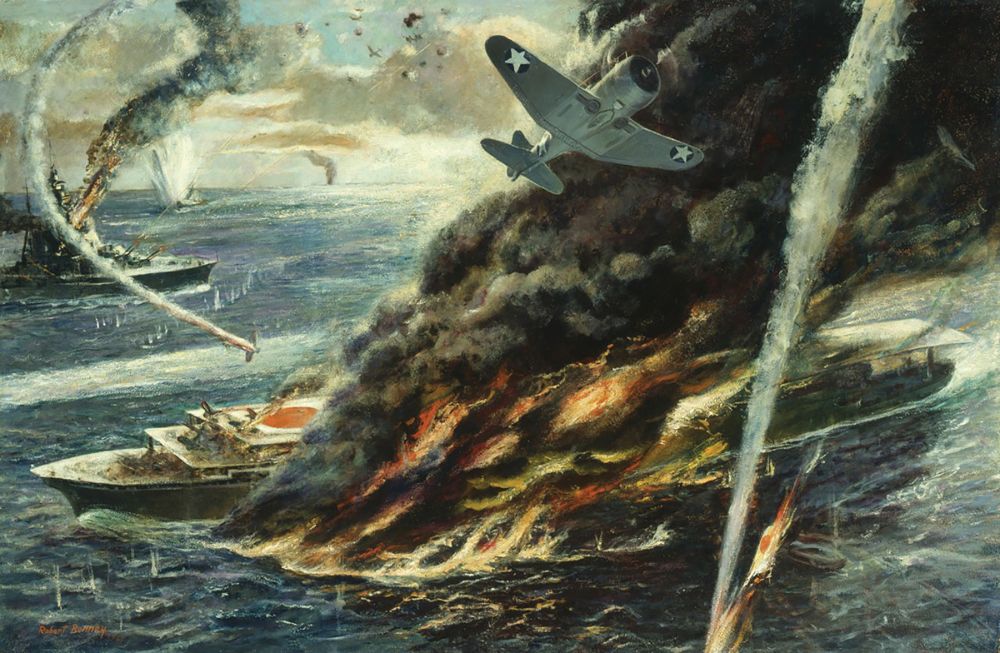
Clash of the Carriers: The Battle of Coral Sea

Displayed at the Museum in collaboration with the Australian National Maritime Museum, Clash of the Carriers: The Battle of the Coral Sea was on display from August 4th through December 31st. The exhibit highlighted the four days in may 1942 when three navies, four aircraft carriers, 255 aircraft and 76 ships fought a battle that changed naval warfare forever. Eight ships were sunk, 161 aircraft destroyed and more than 1,600 men were killed in the world’s first sea battle between aircraft carriers.